
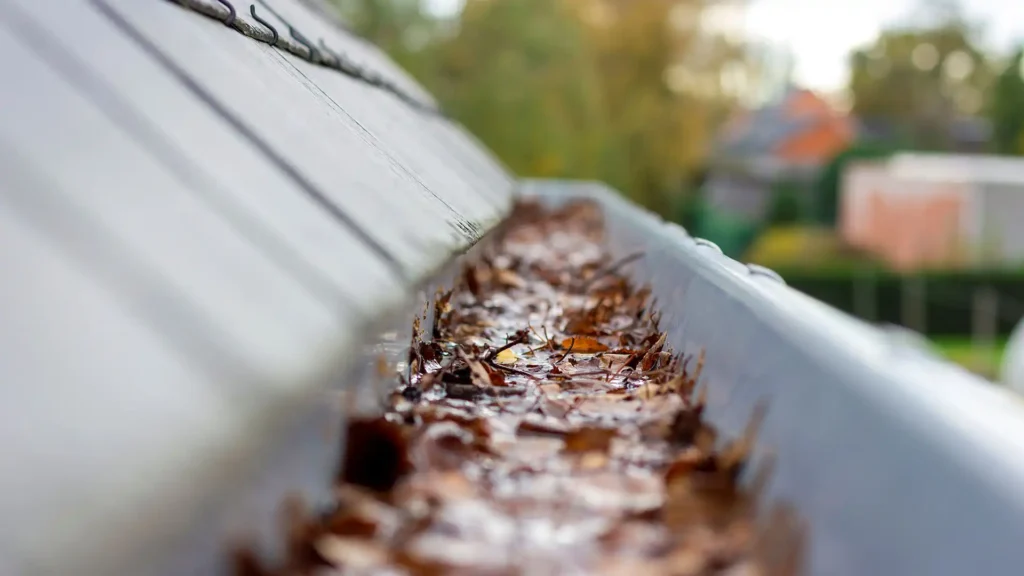

Blocked gutters and downpipes cleared across Folkestone, Sandgate, Hythe and the surrounding villages. All from ground level.


Nesting material is heavier, wetter and far more stubborn than leaf litter. It doesn’t wash through or break down over winter the way leaves do, and it tends to end up compacted at the head of a downpipe rather than sitting in the run. That’s why a Folkestone gutter can look reasonably clear from the ground and still overflow every time it rains.
Add the salt air, which corrodes older cast iron and metal brackets faster than anything inland, and coastal guttering generally takes more punishment than most.
Everything is done from ground level with a high reach vacuum system, so nothing leans against your guttering or your fascias.
Gutter Cleaning


Folkestone is really three different sorts of property, and the gutters behave differently on each.
The tall Victorian and Edwardian terraces along the Leas, in Sandgate and around the Bayle sit three or four storeys up and take the weather straight off the Channel. They’re the ones where salt corrosion and gull nesting show up together, and where getting a ladder up safely on a sloping seafront street is a job in itself.
Up the hill at Cheriton, Morehall and Hawkinge the housing is mostly interwar and post-war semis. Lower, more sheltered, and the problem there is more conventional leaf fall and moss.
Out west towards Hythe, Saltwood, Lyminge and Elham you’re back under tree cover, with mature trees around the older properties and the usual autumn build-up.


Once a year is the minimum here. Twice is more realistic for anything near the front.
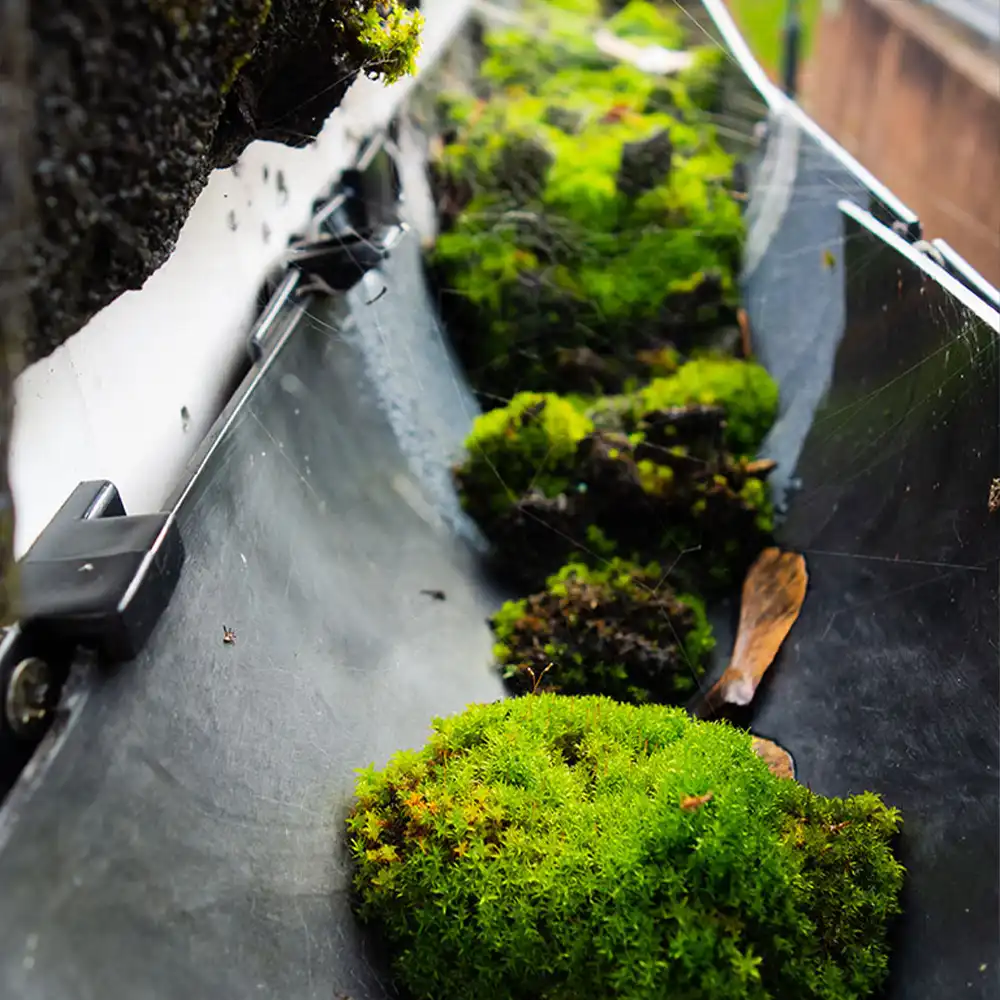
Salt-laden air keeps guttering permanently slightly damp, which means moss and algae grow in the run itself rather than just catching what falls in. Damp gutters hold water against the joints, and on cast iron that’s what starts the corrosion. Once a joint is weeping, water runs down the same stretch of wall every time it rains.
Gull nesting season runs through spring and early summer, so a clear in late summer or early autumn catches the nesting material before the leaf fall arrives on top of it.
On the exposed seafront properties, the render and paintwork are what suffer first. A green stain down a white-rendered Leas terrace is very hard to shift once it’s established.
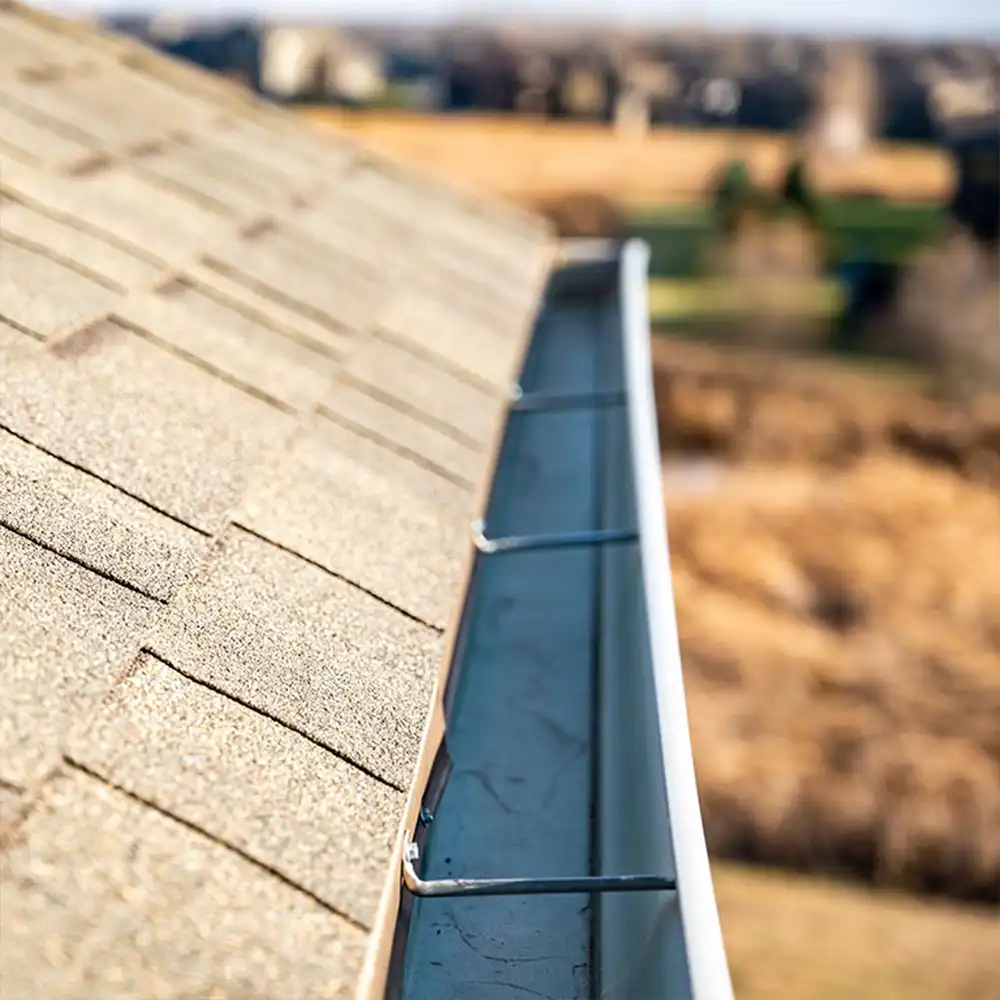

The full run, and the downpipes, which is where the coastal blockages usually are.
On older coastal properties the brackets are worth paying attention to. Salt corrosion means they fail sooner here than inland, and a sagging section holds water rather than draining it. We’ll tell you at the time if anything needs attention beyond a clean.
Where we cover
The Leas, Sandgate, Cheriton, Morehall, Hawkinge, the Bayle, Foord and Shorncliffe, plus Hythe, Saltwood, Seabrook, Lyminge, Elham, Densole and Capel-le-Ferne.
We also work right across the rest of Kent, including Ashford, Canterbury, Dover, Maidstone, Medway, Tunbridge Wells, Sevenoaks and Dartford.
Not sure if we come out your way? Give us a call and we’ll tell you straight away.
We also cover Tonbridge, Dover, Deal and everywhere in between.
Gutter Cleaning
The things people ask most before booking.
Tell us what needs cleaning and we’ll come and look at it. No charge, no obligation, and a fixed price in writing before anything starts.
Yes. Nesting material is heavier and more compacted than leaf litter, so it usually needs the downpipes flushing as well as the run clearing. Late summer or early autumn is the best time, once the season is over.
It depends on the size of the property and how much guttering there is. The tall seafront terraces take longer than a standard semi, so we come out and quote first. There's no charge for that and no obligation.
Yes. The high reach vacuum works from ground level and comfortably handles three and four storeys, so there's no scaffold and no ladders on a sloping street.
Once a year is the minimum, but twice is more realistic for anything near the front. Salt air keeps guttering damp, which means moss grows in the run itself rather than just collecting what falls in.
Yes. As well as Folkestone we're regularly out at Hythe, Sandgate, Saltwood, Seabrook, Lyminge, Elham, Hawkinge and Capel-le-Ferne.