
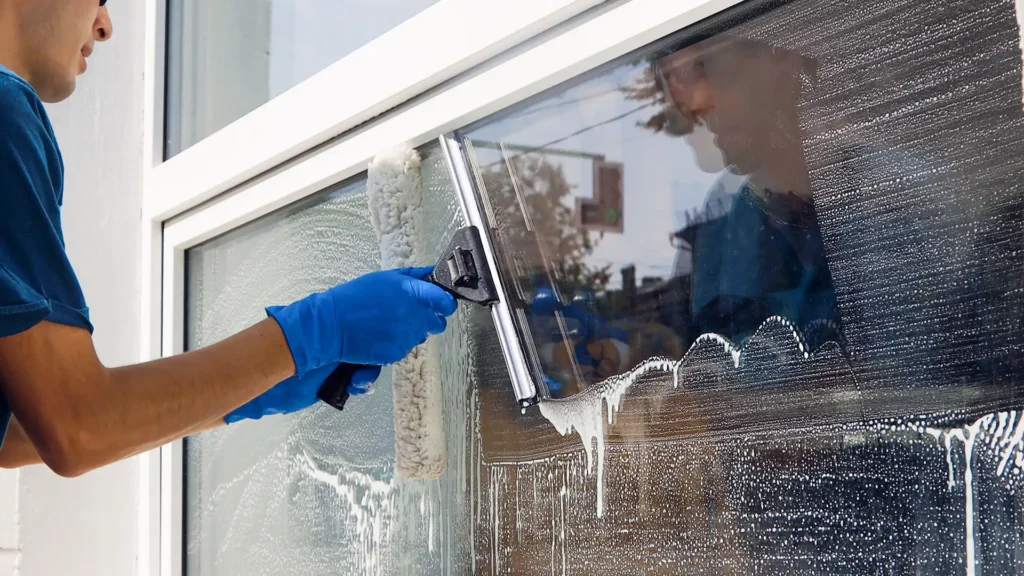
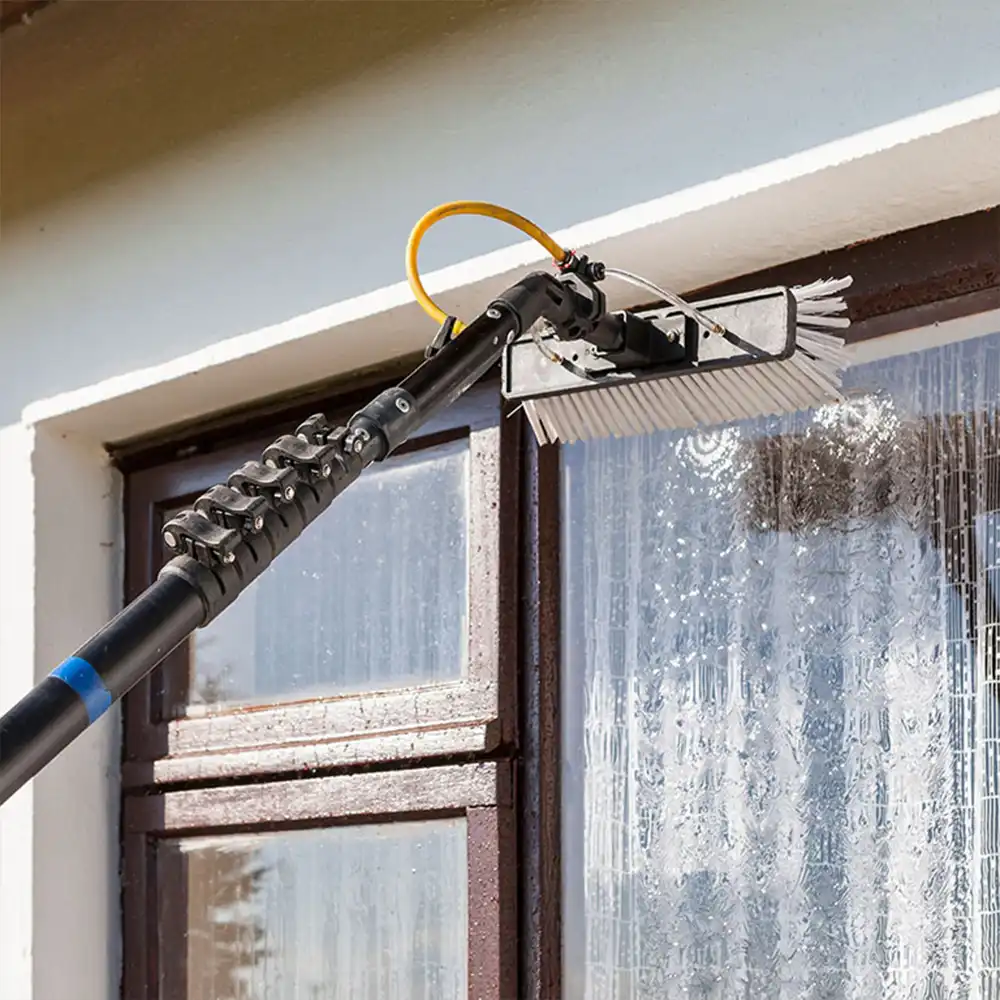
Glass, frames and sills cleaned from ground level using purified water. Seafront properties reached without a ladder going near them.


Sea air carries a fine saline deposit that settles on glass and hazes it. It isn’t dirt in the usual sense, which is why it doesn’t wash off in the rain and why properties facing the Channel go dull far quicker than anything inland. Most people notice it as a milky film in low sun rather than as visible grime.
It’s also why a squeegee and a bucket rarely leave a coastal window looking properly clear. Tap water carries its own minerals, and adding those to a salt deposit gives you streaking rather than a clean.
Everything is cleaned from ground level using a water-fed pole, so no ladders go against your property.
Window Cleaning


Purified water and a soft brush, with the frames and sills done as standard.
Ordinary tap water carries dissolved minerals, and when it dries on glass it leaves those minerals behind. Purified water has had them filtered out, so it dries clear without needing to be squeegeed or buffed.
On the coast that matters twice over. The brush lifts the salt film, the pure water rinses it away, and there’s nothing left behind to haze over as it dries.
The frames get particular attention here. Salt collects in the drainage channels and the rubber seals on UPVC, and left alone it corrodes hinges and handles. Cleaning them is as much maintenance as cosmetics.


Four weeks on the seafront, six to eight further up the hill.
Anything facing the water along the Leas, in Sandgate or on the front at Hythe picks up salt continuously, not just in bad weather. A four-weekly round keeps it consistently clear.
Up at Cheriton, Morehall and Hawkinge you’re far enough back that it’s more conventional dust and rain spotting, and six to eight weeks is usually plenty.
Out towards Saltwood, Lyminge and Elham it’s tree cover rather than sea air, so sap and pollen through spring and summer are the thing to watch.

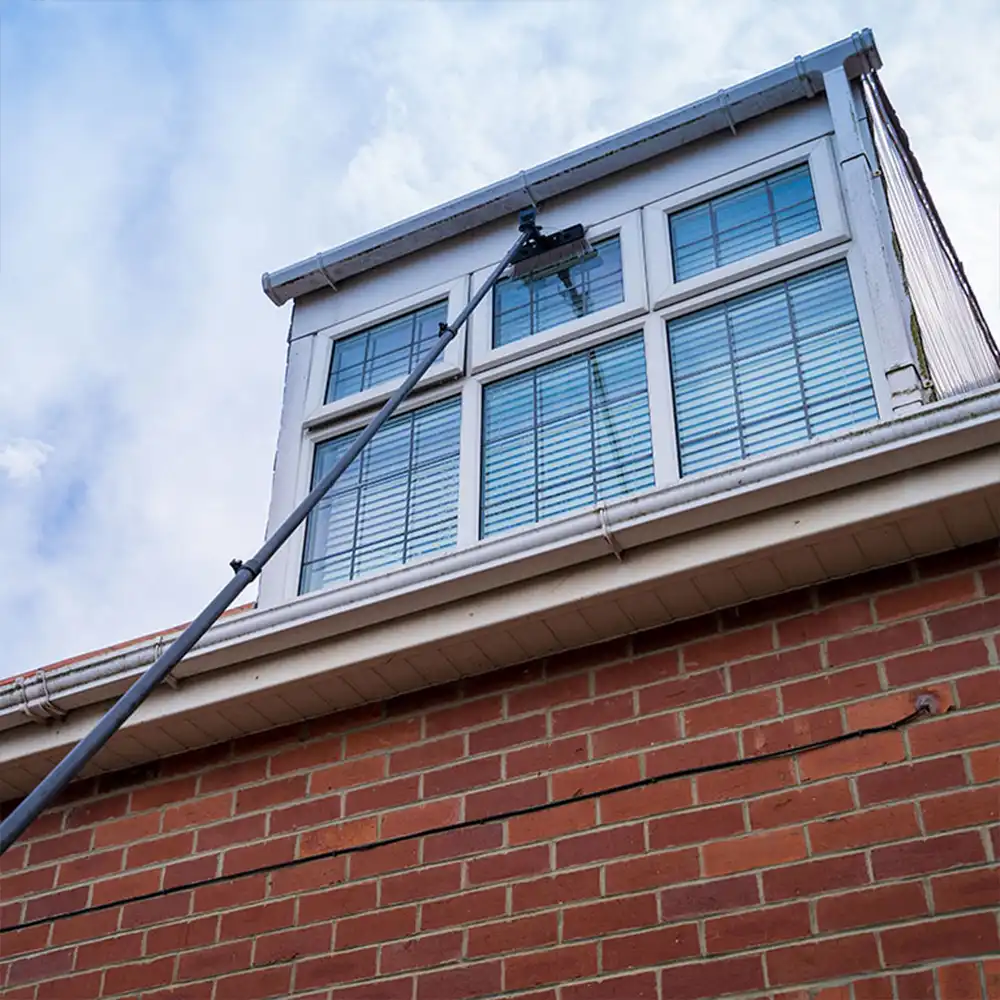
Not just the front of the house.
The tall Victorian and Edwardian terraces along the Leas and around the Bayle run three and four storeys. The pole reaches the top floor from the ground, which means no ladder on a sloping seafront street and no top windows quietly skipped.
Holiday lets and second homes are worth a mention too. If you’re not local, we can work to changeover dates and let you know when it’s done.
Where we cover
The Leas, Sandgate, Cheriton, Morehall, Hawkinge, the Bayle, Foord and Shorncliffe, plus Hythe, Saltwood, Seabrook, Lyminge, Elham, Densole and Capel-le-Ferne.
We also work right across the rest of Kent, including Ashford, Canterbury, Dover, Maidstone, Medway, Tunbridge Wells, Sevenoaks and Dartford.
Not sure if we come out your way? Give us a call and we’ll tell you straight away.
We also cover Tonbridge, Dover, Deal and everywhere in between.
Window Cleaning
The things people ask most before booking.
Tell us what needs cleaning and we’ll come and look at it. No charge, no obligation, and a fixed price in writing before anything starts.
Salt deposit. Sea air leaves a fine saline film on the glass that rain doesn't wash away, and it builds up faster on anything facing the water. A four-weekly round tends to keep on top of it better than leaving longer between cleans.
Yes. The water-fed pole works from ground level and comfortably handles three and four storeys, so the top floor gets the same clean as the ground floor and there's no ladder on a sloping street.
It depends on the size of the property and how many windows there are. A terraced house is at the lower end, a large seafront property towards the higher. We'll give you a fixed price before any work starts and there's no charge for quoting.
Yes, as standard. On the coast it matters more than usual, since salt collects in the drainage channels and seals and will corrode hinges and handles if it's left.
Yes. Plenty of our coastal work is second homes and holiday lets. Tell us the changeover dates and we'll fit around them, and we'll let you know once it's done if you're not local.