
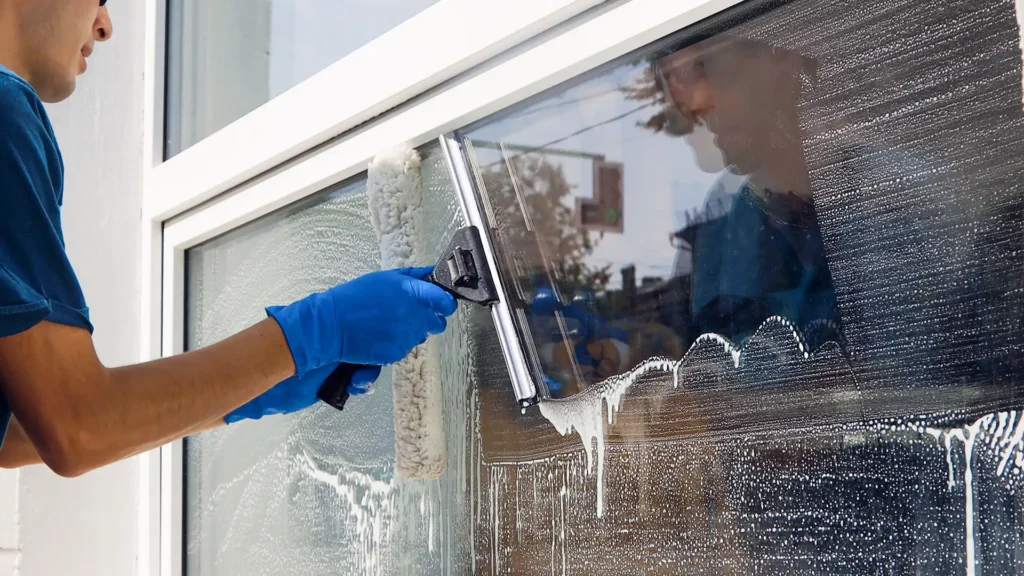
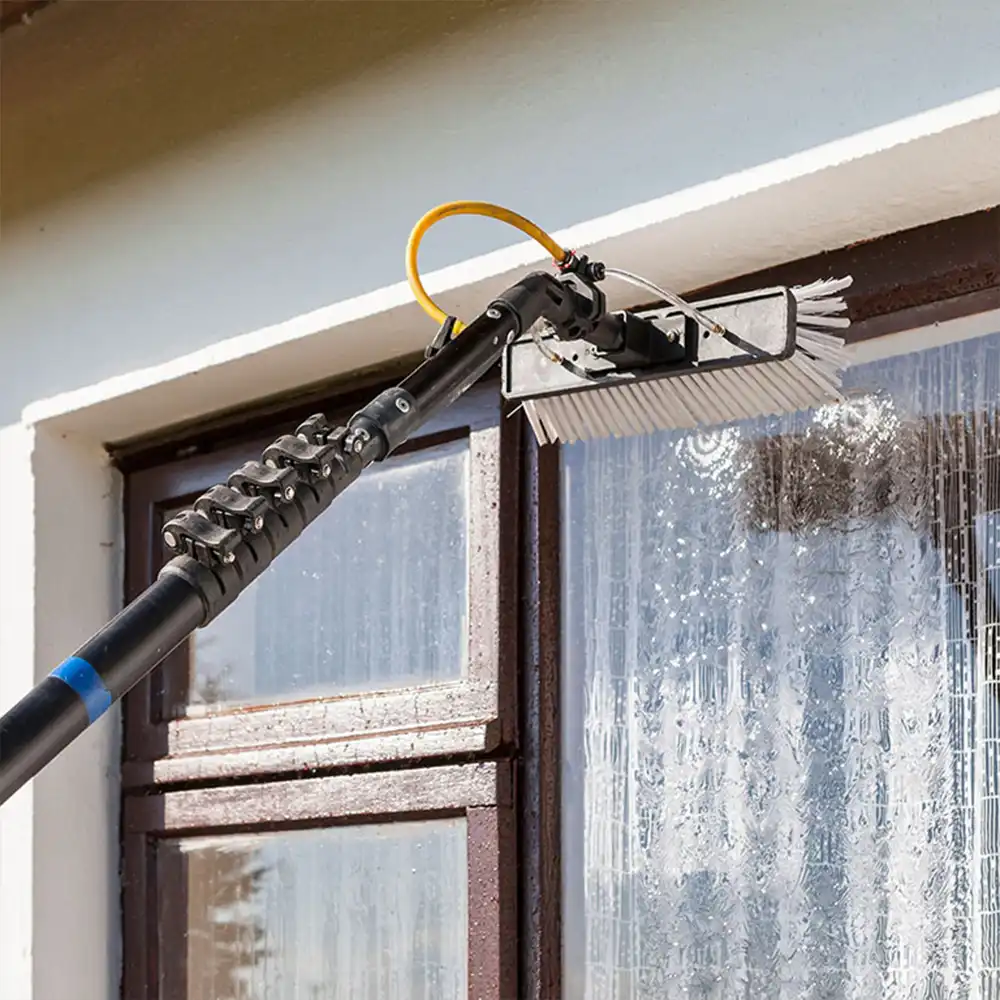
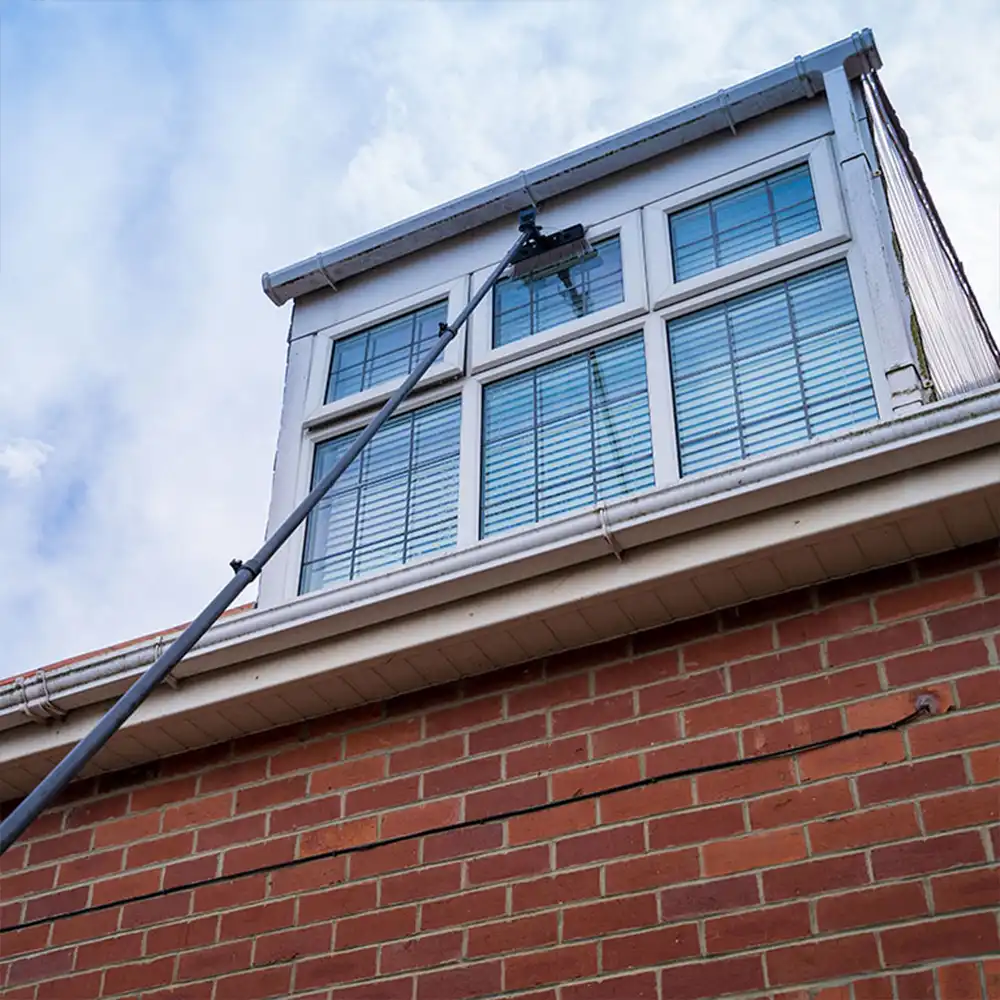
Glass, frames and sills cleaned from ground level using purified water. Tall period properties reached without a ladder going near them.


On a villa in the Pantiles, off Mount Ephraim or around Calverley Park, the top floor sits thirty feet up. Traditionally that meant a very long ladder on a sloping street, or a cleaner who quietly skipped the top windows and hoped nobody looked.
We work entirely from the ground with a water-fed pole. Third-floor glass gets the same clean as the ground floor, and nothing rests against original stonework, decorative bargeboards or your conservatory roof.
We’re out in Tunbridge Wells and Southborough regularly, on both one-off cleans and regular rounds.
Window Cleaning


Purified water and a soft brush, with the frames and sills done as standard.
Ordinary tap water carries dissolved minerals, and when it dries on glass it leaves those minerals behind. That’s what spotting and streaking actually is. Purified water has had them filtered out, so it dries clear without needing to be squeegeed or buffed.
That matters more than usual on period glass. Older panes are rarely perfectly flat, so anything left as a residue shows up as streaking in the light. Cleaning with pure water and letting it dry avoids the problem entirely.
The frames and sills are done as standard, which on a sash window means the horns and the glazing bars as well as the flat surfaces. No detergents, so nothing running off onto painted timber or into the planting below.


Every four to eight weeks, though tree cover is what really decides it here.
Tunbridge Wells is one of the greenest towns in the South East, and the mature limes, beeches and horse chestnuts around Calverley Park, Hungershall Park and out towards Rusthall drop sap and pollen through spring and summer. Sap in particular is far more stubborn on glass than dust, and it hardens if it’s left.
Properties under heavy tree cover generally want a four-weekly round through the growing season, easing off to six or eight over winter.
More open positions on the higher ground towards Mount Ephraim and Broadwater Down pick up less, and six to eight weeks tends to be plenty year round.
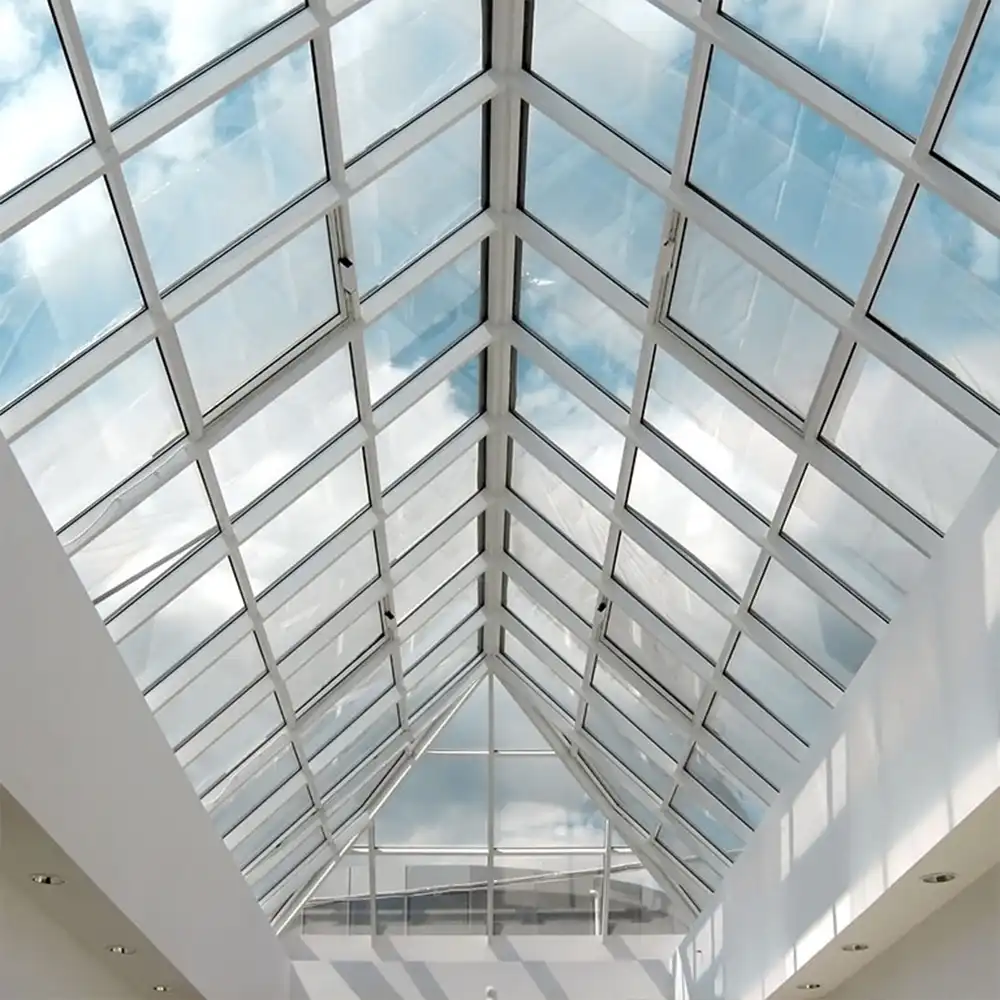

A good deal of central Tunbridge Wells is either listed or inside a conservation area.
Because we work from the ground rather than putting ladders against the building, there’s no contact with the fabric of the property at all. No weight on original glazing bars, no ladder feet in the borders, and nothing propped against decorative stonework.
If your property is listed, mention it when you call so we can talk through access beforehand. Same if you’re in a converted villa where the glazing is shared, since it’s usually simpler to do the whole building at once.
We also clean:
Where we cover
The Pantiles, Mount Ephraim, Calverley Park, Hungershall Park, Broadwater Down, Rusthall, St John’s, Sherwood, High Brooms and Southborough, plus Bidborough, Speldhurst, Langton Green, Pembury, Frant and Groombridge.
We also work right across the rest of Kent, including Tonbridge, Sevenoaks, Maidstone, Medway, Ashford, Canterbury, Dartford and Gravesend.
Not sure if we come out your way? Give us a call and we’ll tell you straight away.
We also cover Tonbridge, Dover, Deal and everywhere in between.
Window Cleaning
The things people ask most before booking.
Tell us what needs cleaning and we’ll come and look at it. No charge, no obligation, and a fixed price in writing before anything starts.
Yes. The water-fed pole works from ground level and comfortably reaches three storeys, so the top floor gets the same clean as the ground floor and there's no ladder against the building.
It depends on the size of the property and how many windows there are. The larger Victorian villas take longer than a standard semi, so we'll give you a fixed price before any work starts. There's no charge for quoting.
Yes. Because we work from the ground there's no contact with the fabric of the property, no ladders against stonework and nothing resting on original glazing. Do mention it when you call so we can talk through any access restrictions.
Every four to eight weeks. Under heavy tree cover, around Calverley Park, Hungershall Park or Rusthall, four weeks through spring and summer is more realistic, since sap and pollen are harder to shift than dust.
Yes, including the glazing bars and horns rather than just the flat glass. Pure water suits older panes well, since there's no residue left behind to show up as streaking in the light.